
Revolutionizing rail infrastructure across Europe through co-creation!
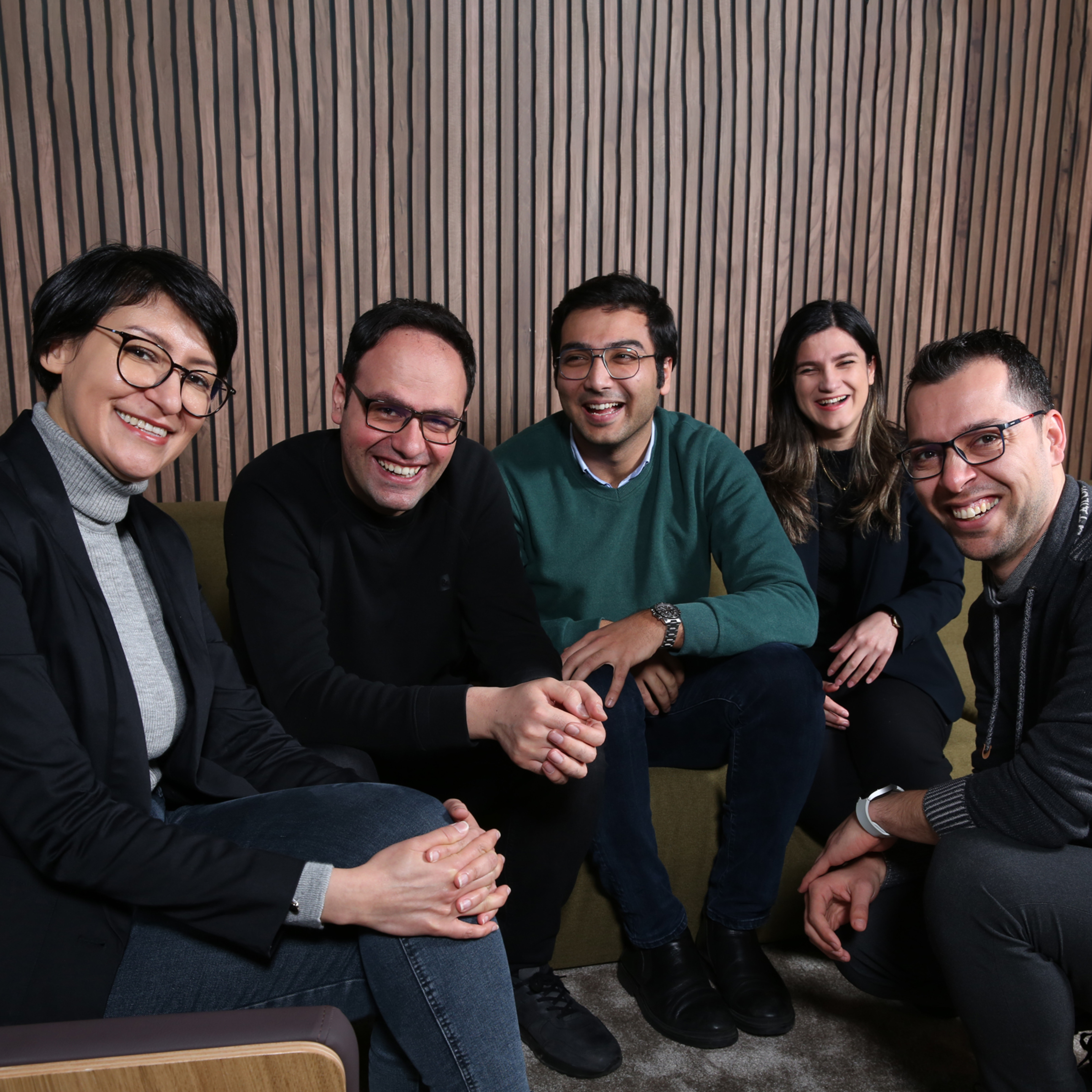
PANTOhealth team (left to right); Mina Kolagar, Farzad Vesali, Payam Jamili, Mahya Adibi, Amir Bashari; the co-founder team includes: Mina Kolagar, Farzad Vesali, Amir Bashari, and Morteza Nokhodian (not available in this Photo)
Photo credits: photographer Adam Berry, and the EIT Urban Mobility Media.
Introduction:
Today, we share with you the story of PANTOhealth, a startup that is redefining the future of Europe's rail infrastructure. We had a chance to talk to Mina, co-founder of PANTOhealth, who took us through the origins of this pioneering company and its mission to revolutionize an industry vital to sustainable transport. We talked also about how PANTOhealth’s partnership with SCE Freiraum Ventures and EIT Urban Mobility fueled their expansion into 10 countries and the role of their collaborative projects, like the one with HGK (Germany’s largest logistics company for inland shipping) in Cologne, in advancing predictive maintenance technologies. In the interview, Mina also shares what made PANTOhealth a beacon of innovation in urban mobility and her vision for scaling operations globally, including entering markets like India.
Pavlina: "Mina, let’s start at the beginning. What sparked the creation of PANTOhealth, and why focus on Europe's rail infrastructure?"
Mina: "In 2016 My colleague, Farzad, and I were guest researchers in Germany, he was a PhD student in the Rail Industry, and I was a PhD student in Energy Systems engineering. We both had a keen interest in the railway industry. It was his field and for me, it was important because E-Trains are the most environmentally friendly mode of public transportation. We observed a growing demand within the EU rail infrastructure due to aging infrastructure, increasing maintenance costs, and prolonged maintenance times. Additionally, with the EU's emphasis on expanding rail transportation as the most environmentally friendly forms of transportation, the need for modernization became evident. Moreover, there's a shortage of skilled workforce, complicating maintenance actions further.
Recognizing the emerging demand, particularly in the digitization of infrastructure maintenance, we saw an opportunity despite the challenges of entering the tough rail market as a young and small company. We believed in our ability to address this technical challenge and decided to relocate to Germany to pursue our idea."
Pavlina: "Co-creation has been pivotal in PANTOhealth’s journey. Can you describe a co-creation project that significantly enhanced your predictive maintenance solutions?"
Mina: "Certainly, our collaboration with HGK in Cologne stands out. During our intensive sessions, we decided to integrate 2D laser sensors into our data collection systems—a direct response to real user needs. This innovation didn’t just solve an existing problem; it also opened doors to new markets worldwide."
Pavlina: "How did you manage this co-creation effort and maintain a positive relationship with HGK?"
Mina: "Our approach was to foster transparent, goal-oriented communication across all levels. Regular technical meetings ensured everyone was aligned, while our business teams developed joint marketing strategies and presented a unified front at industry events. This synergy was crucial for maintaining a productive partnership and steering the project to success."
Pavlina: "Data is crucial in predictive maintenance. How does PANTOhealth handle the complexities of data collaboration with rail operators and maintenance teams?"
Mina: "All AI-based prediction solutions require data for training and development. However, our approach isn't confined to just using data from monitoring real systems. This allows us to develop a preliminary version of our product to demonstrate to our target groups. We share initial results on our monitoring platform with train operators, infrastructure managers, and maintenance providers, so they can clearly see the value we offer.
Nevertheless, this process is complex. The market's intricacy means maintenance providers are our service users, but we also need to convince train operators to install our monitoring hardware. This brings us to the importance of co-creation. In our approach, co-creation involves collaboration between two key partners: maintenance providers and train operators. We focus on starting our work in cities and countries known for a strong co-creation culture, such as Cologne or Belgium, where train operators and maintenance providers work well together."
Pavlina: "During the co-creation process with HGK you also got many investors on board, including EIT Urban Mobility. What do you think attracted them to invest in PANTOhealth?"
Mina: "Our mission aligned perfectly with EIT Urban Mobility’s goals, making us an ideal addition to their investment portfolio. Beyond the financial infusion, our investors brought deep industry connections, aiding our expansion into multiple countries. I believe EIT UM recognized not just our product's demand but also our dedicated team and comprehensive business approach, which are crucial factors for investors."
Pavlina: "Looking forward, what are PANTOhealth’s immediate priorities as you plan to scale operations internationally and where do you see it in five years time?"
Mina: "Our immediate focus is on proving the economic value of our solutions. We’re refining our estimates on maintenance and delay cost reductions to ensure our clients recognize and trust the benefits we provide. In five years, I see PANTOhealth as a leader in optimizing rail system maintenance globally. Our commitment to sustainable transportation and our co-creation model are key to staying ahead. Recognizing our limitations as a young SME, we are motivated to start partnerships with other industry players to enhance our service offerings. Such measures make us remain agile, have a better forecast related to future changes through innovation and cooperation in a competitive business environment."
Pavlina: "Lastly, Mina, what advice would you give to budding entrepreneurs in the tech and sustainability sectors?"
Mina: "Identify unsolved challenges and focus on them. Stay open to feedback and adapt your technology accordingly. Use every opportunity to refine your product based on real-world inputs and customer needs."
Pavlina: " And one more thing ….If you could describe your team in one word, what would it be?"
Mina: "Reliable. Our diverse skills and unified commitment make us a resilient force in the face of industry challenges."